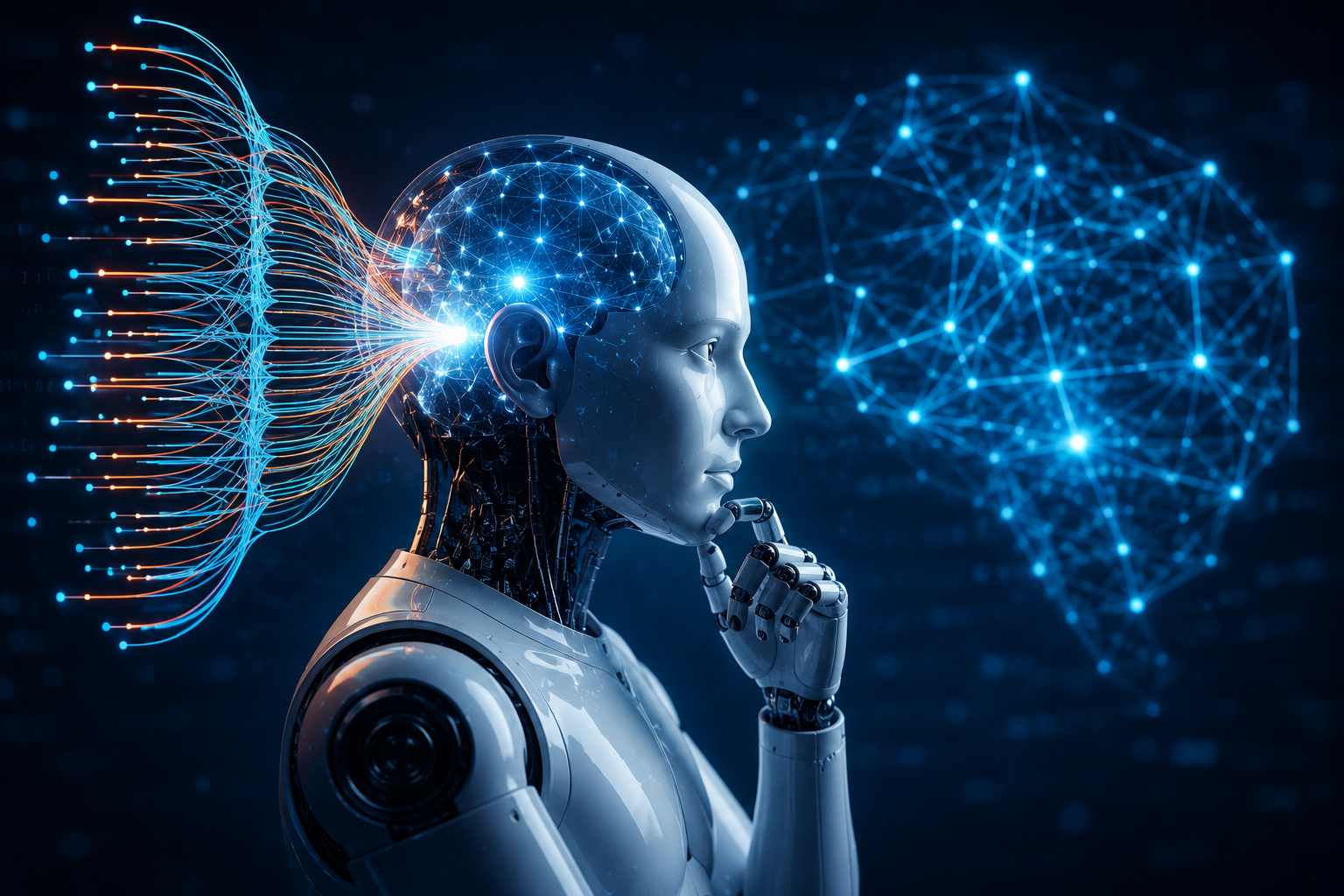
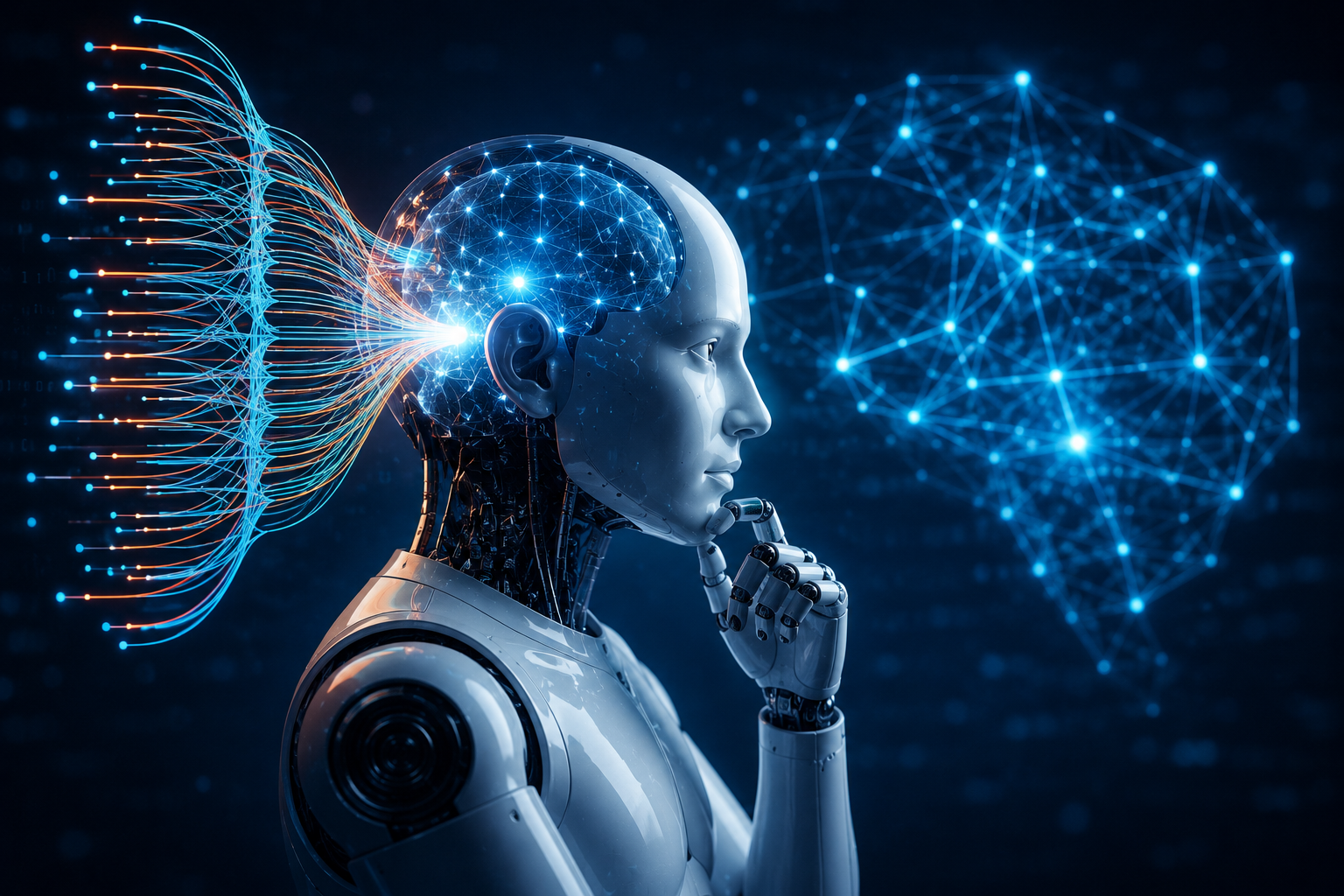
Artificial Intelligence (AI) has emerged as one of the most revolutionary technologies of the 21st century. From voice assistants and self-driving cars to healthcare diagnostics and smart manufacturing, AI is transforming how people live, work, and interact with technology. As nations and businesses invest heavily in AI research and development, the technology is expected to play a crucial role in shaping the future of the global economy.
What is Artificial Intelligence?
Artificial Intelligence refers to the ability of machines and computer systems to perform tasks that normally require human intelligence. These tasks include learning, reasoning, problem-solving, decision-making, language understanding, and pattern recognition.
AI systems analyze large amounts of data, identify trends, and make predictions or decisions with minimal human intervention. The goal of AI is to create machines that can think, learn, and adapt similarly to humans.
History of Artificial Intelligence
The concept of intelligent machines has existed for decades. The term "Artificial Intelligence" was first introduced by computer scientist John McCarthy in 1956 during the Dartmouth Conference in the United States.
Over the years, advancements in computing power, data storage, and machine learning algorithms have accelerated AI development. Today, AI is used in nearly every major industry worldwide.
Types of Artificial Intelligence
- Narrow AI (Weak AI): Designed to perform specific tasks efficiently. Examples include voice assistants like Siri and Alexa, recommendation systems used by Netflix and YouTube, and facial recognition technology.
- General AI (Strong AI): Refers to machines capable of performing any intellectual task that a human can perform. Such systems do not yet exist and remain a subject of research.
- Super AI: A hypothetical concept where machines surpass human intelligence in all aspects. It remains theoretical and has not been achieved.
Applications of AI
- Healthcare: AI helps doctors diagnose diseases, analyze medical images, discover new drugs, and provide personalized treatment plans.
- Education: AI-powered learning platforms provide customized educational experiences and assist students in improving their performance.
- Banking and Finance: Banks use AI for fraud detection, risk assessment, customer support, and automated trading systems.
- Transportation: Self-driving vehicles, traffic management systems, and route optimization rely heavily on AI technologies.
- Agriculture: Farmers use AI for crop monitoring, disease detection, weather forecasting, and precision farming.
- E-Commerce: Online shopping platforms use AI to recommend products, improve customer service, and analyze consumer behavior.
Benefits of Artificial Intelligence
- Increased efficiency and productivity.
- Faster decision-making with reduced human errors.
- Improved healthcare outcomes.
- Enhanced customer experiences.
- Better data analysis and forecasting.
Challenges and Risks
Despite its advantages, AI presents key challenges: job displacement due to automation, privacy and data security concerns, ethical issues in decision-making, potential misuse, and bias in AI algorithms. Governments worldwide are working to establish regulations for responsible AI development.
AI in India
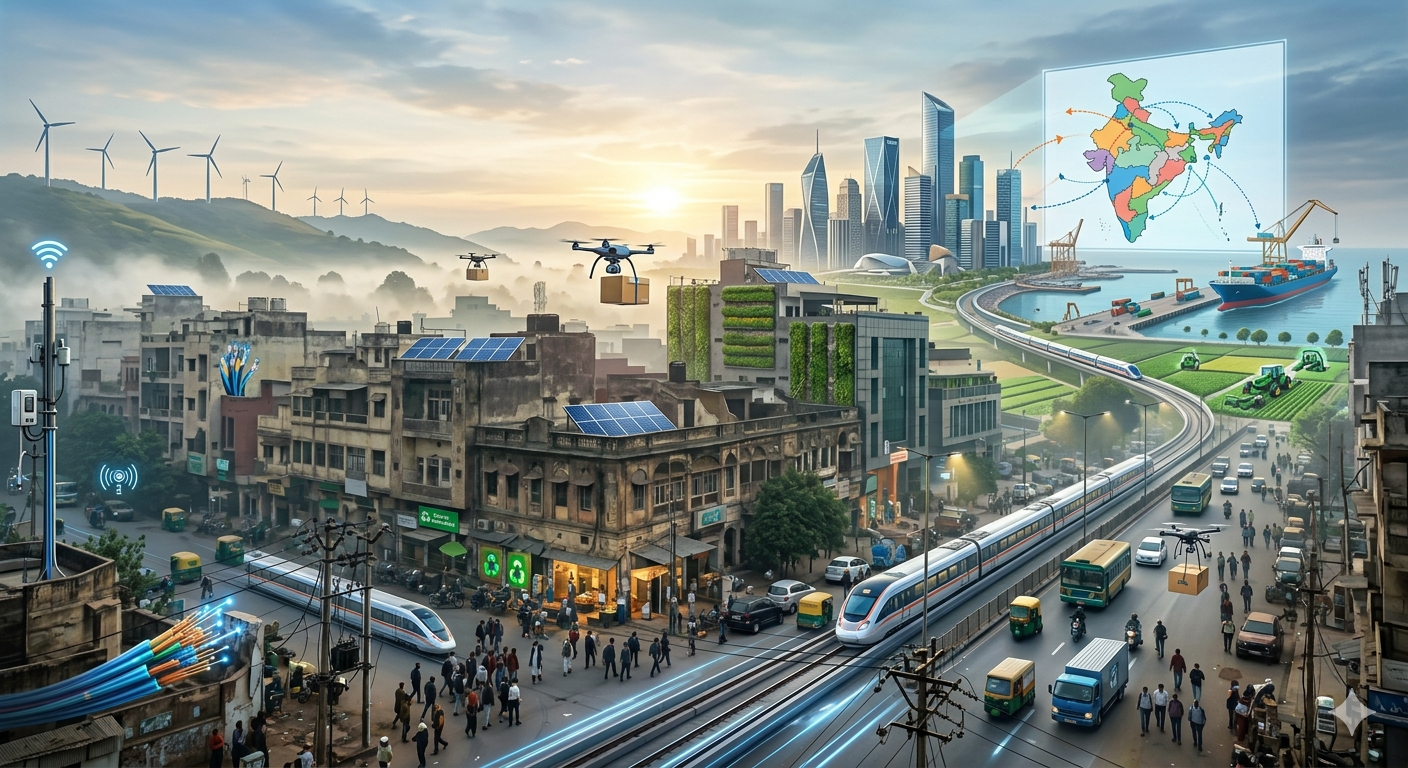
India has emerged as a major player in the global AI ecosystem. The government has launched several initiatives to promote AI research, innovation, and skill development. AI is being increasingly adopted in sectors such as healthcare, agriculture, education, governance, and financial services.
Programs such as Digital India and the National Strategy for Artificial Intelligence aim to make India a global hub for AI innovation.
Future of Artificial Intelligence
Experts believe that AI will continue to transform industries and create new opportunities in the coming decades. Emerging technologies such as Generative AI, Robotics, Autonomous Systems, and AI-powered Healthcare are expected to drive the next wave of innovation.
While AI may replace certain repetitive jobs, it is also expected to create new employment opportunities requiring advanced technical and analytical skills.
Conclusion
Artificial Intelligence is no longer a futuristic concept; it is already an integral part of modern life. From improving healthcare and education to enhancing business operations and public services, AI has the potential to solve some of humanity's biggest challenges. However, its growth must be accompanied by ethical practices, responsible governance, and continuous innovation to ensure that its benefits are shared by all.
Exam-Oriented Quick Facts
| Point | Detail |
|---|---|
| Full Form | Artificial Intelligence |
| Term Coined By | John McCarthy |
| Year Introduced | 1956 |
| Event | Dartmouth Conference, USA |
| Main Objective | Simulate Human Intelligence |
| Major Technologies | Machine Learning, Deep Learning, NLP |
| Types of AI | Narrow AI, General AI, Super AI |
| Key Sectors | Healthcare, Education, Finance, Agriculture |
| AI in India | Supported under Digital India & National AI Strategy |
| Major Benefit | Automation and Improved Efficiency |
| Major Concern | Privacy, Ethics, and Job Displacement |