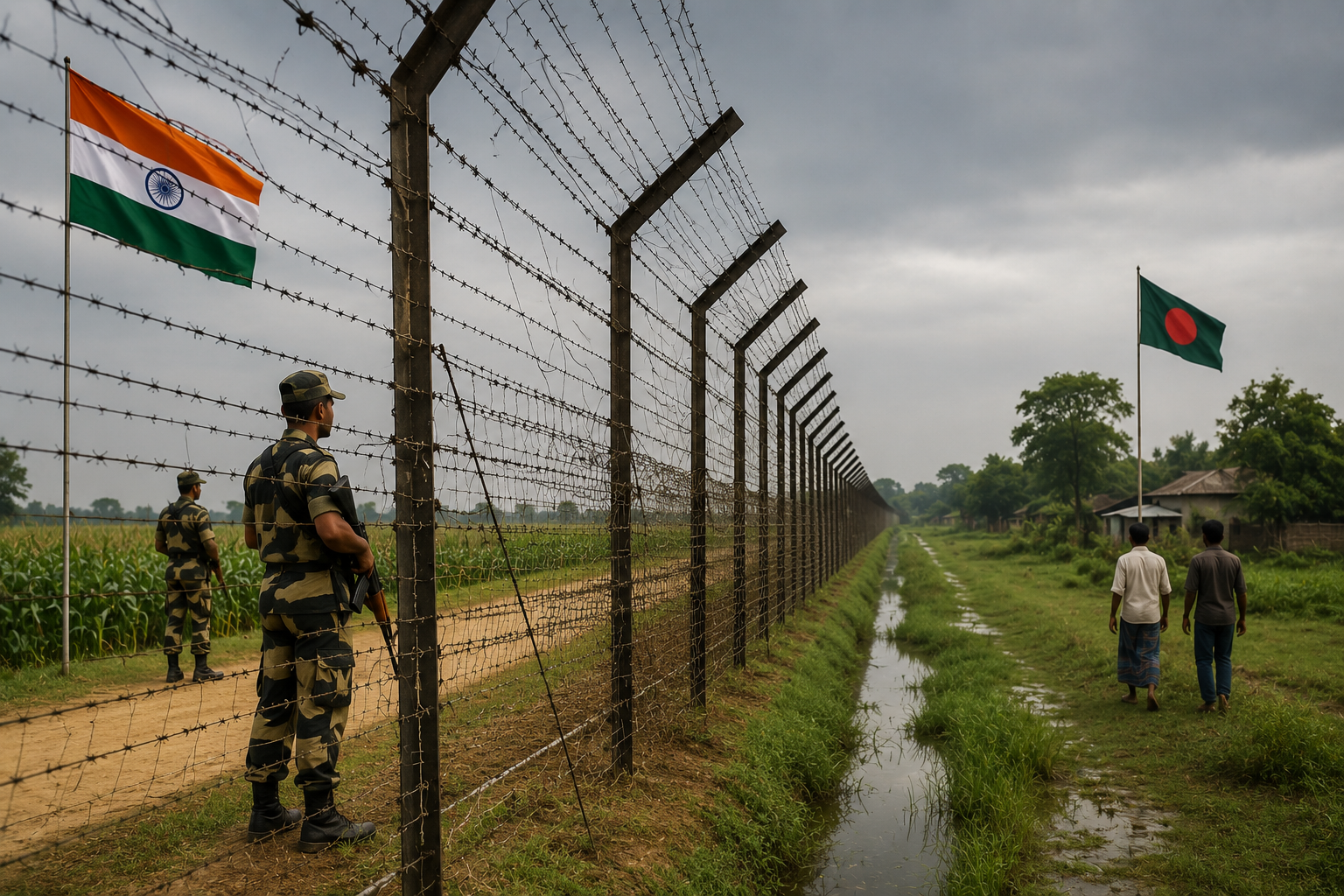
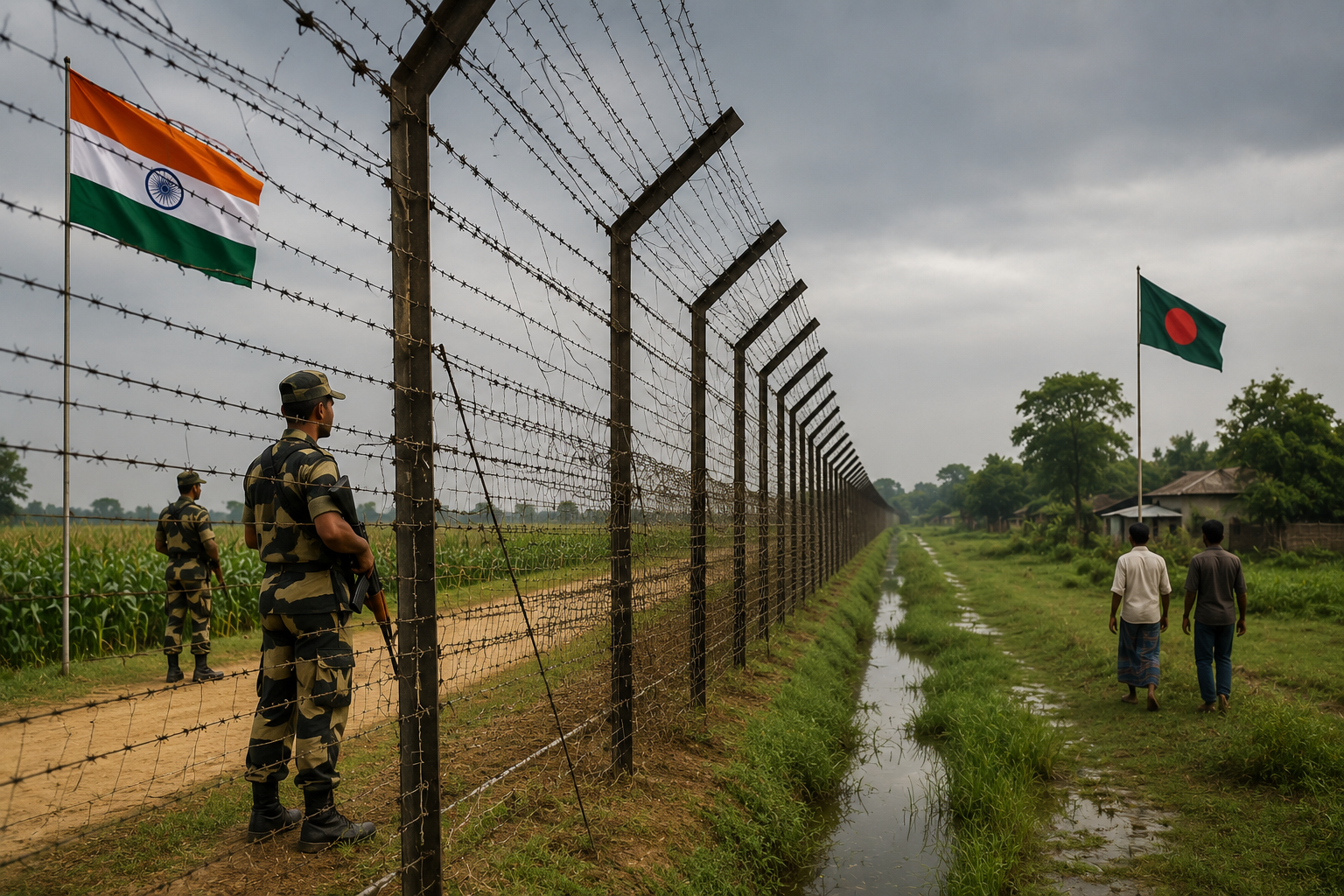
The India-Bangladesh border is one of the longest international borders in the world, stretching approximately 4,096 kilometers across the Indian states of West Bengal, Assam, Meghalaya, Tripura, and Mizoram. Due to concerns related to illegal migration, smuggling, human trafficking, and cross-border crimes, India has been constructing fencing along the border to strengthen security and improve border management.
Why is Border Fencing Important?
Border fencing is considered a crucial security measure for preventing unauthorized crossings and reducing cross-border criminal activities. The fencing also helps security agencies monitor border areas more effectively and maintain law and order in sensitive regions.
The Government of India has stated that fencing plays an important role in curbing smuggling, trafficking, illegal migration, and the movement of criminals across the border.
Current Status of Border Fencing
According to information provided in Parliament, around 79% of the India-Bangladesh border has been fenced. Out of the total border length of approximately 4,096 km, about 864 km still remains unfenced, including sections where fencing is not technically feasible.
The West Bengal government handed over land to the Border Security Force (BSF) to facilitate construction of fencing in several border districts, accelerating the remaining fencing process.
Major Challenges in Border Fencing
- Difficult Terrain: Many sections of the border pass through rivers, marshlands, forests, and flood-prone areas where constructing physical barriers is difficult.
- Land Acquisition Issues: Acquiring land for fencing and border infrastructure remains a major hurdle in several regions.
- Security and Diplomatic Concerns: Some border stretches require coordination between India's BSF and Bangladesh's Border Guard Bangladesh (BGB), making the process sensitive from a diplomatic perspective.
- Riverine Borders: Large portions of the border run through rivers, making conventional fencing impossible. In such areas, surveillance technology and increased patrolling are used.
Benefits of Border Fencing
- Better border surveillance.
- Reduction in illegal migration.
- Prevention of smuggling activities.
- Improved national security.
- Enhanced coordination between security agencies.
- Better management of border populations.
Impact on India-Bangladesh Relations
While India views fencing as a sovereign security measure, border construction occasionally becomes a diplomatic issue between the two countries. Both governments generally emphasize cooperation, dialogue, and adherence to bilateral agreements while addressing border management concerns.
The Way Forward
Experts suggest that a combination of physical fencing, advanced surveillance systems, drones, smart sensors, floodlighting, and enhanced cooperation between India and Bangladesh will be necessary to secure the remaining border stretches.
Completing the remaining fencing project while maintaining good bilateral relations remains a key objective for both nations.
Conclusion
India-Bangladesh border fencing is one of India's largest border management projects. While significant progress has been achieved, challenges such as difficult terrain, land acquisition, and diplomatic sensitivities continue to affect completion timelines. With ongoing infrastructure development and improved security measures, the project is expected to play an important role in strengthening national security and border governance.
Exam-Oriented Quick Facts
| Point | Detail |
|---|---|
| Total Border Length | Approximately 4,096 km |
| States Sharing Border | West Bengal, Assam, Meghalaya, Tripura, Mizoram |
| Border Guarding Force (India) | Border Security Force (BSF) |
| Border Guarding Force (Bangladesh) | Border Guard Bangladesh (BGB) |
| Fencing Completed | Around 79% |
| Unfenced Length | Approximately 864 km |
| Main Objective | Prevent Illegal Migration & Cross-Border Crime |
| Key Challenges | Rivers, Marshlands, Land Acquisition, Diplomacy |
| Recent Development | West Bengal govt. handed land to BSF (June 2026) |
| Strategic Importance | National Security & Border Management |